

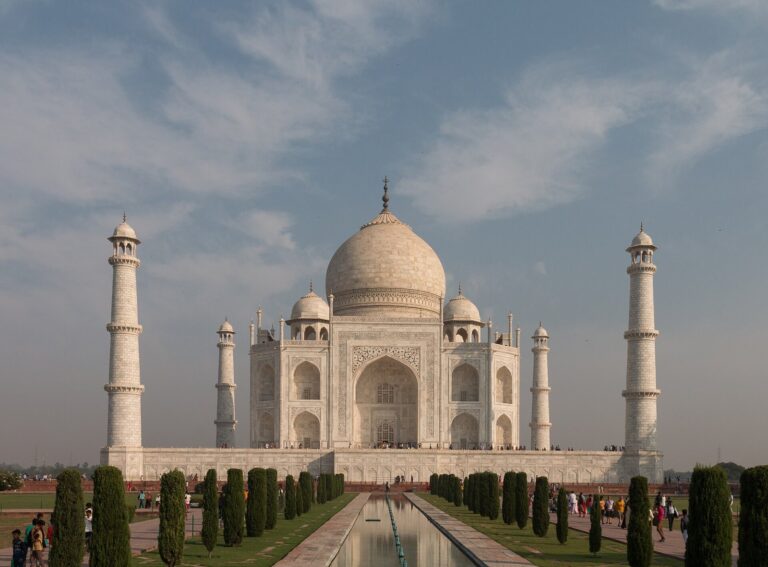
 Golden Triangle India in 5 Days: What to Book Ahead (and What Not To)
Read guide →
Destination guide
India Travel Guide
Which circuit to choose, what it really costs, and an honest word on what first-timers find hard.
- Best time
- October to March
- Currency
- Indian rupee (INR)
- Language
- Hindi, English and many others
- Plan for
- 12–16 days
VTourBook earns a commission when you book through our links, at no extra cost to you. We don’t sell tours or own hotels — which is why these guides tell you when the cheaper option is the better one.
Choose a circuit, not a country
India is vast and varied enough that “a trip to India” means very little. The practical unit is a circuit — a region you can cover without spending your holiday on internal flights.
The circuits that work
- The Golden Triangle. Delhi, Agra, Jaipur. The standard first trip, doable in five to seven days, and genuinely spectacular. Also the most touristed and the most hassle.
- Rajasthan. The Golden Triangle extended into Udaipur, Jodhpur and Jaisalmer. Ten days to two weeks. Forts, palaces and desert.
- Kerala. Backwaters, tea plantations and beaches in the far south. Gentler, greener, cleaner and much easier for nervous first-timers.
- Goa. Beaches and Portuguese-era architecture. The easiest place in India to do very little.
- The Himalayan north. Rishikesh, Dharamshala, Ladakh. Mountains, trekking and a completely different pace.
A useful pattern for a first visit is Golden Triangle followed by Kerala — the intense version of India and the restful one, in one trip.
What it costs
India can be extraordinarily cheap or genuinely expensive, and the gap between those is wider than almost anywhere.
Backpacking on local transport and simple guesthouses: $25–45 per person per day. Comfortable mid-range with decent hotels, private drivers and good restaurants: $70–130. Heritage palace hotels and luxury trains run into the hundreds.
The mid-range option is the one most visitors should consider. A private car with driver costs roughly $40–70 a day across most of the country — split between two or four people, that transforms the trip for very little, removing most of the logistical friction that makes India tiring.
Set your own numbers in our trip cost calculator.
When to go
October to March for most of the country. November to February is the peak for the north, when Delhi and Rajasthan are pleasantly cool — though northern India suffers serious air pollution in November and December, which is worth factoring in if you have respiratory issues.
The monsoon runs roughly June to September across most of the country. Kerala is beautiful and cheap in the monsoon if you do not mind rain. Ladakh is the reverse, only accessible in summer.
April and May are extremely hot across the plains — routinely over 40°C.
Getting around
Domestic flights are cheap and save days. Trains are an experience worth having at least once, and the higher classes are comfortable, but booking is its own skill and popular routes sell out weeks ahead.
For anything within a region, a car with driver is the pragmatic choice. Self-driving is not recommended for visitors.
The things people find hard
It is worth being honest about this. First-time visitors commonly find the crowds, the noise, the persistent commercial attention in tourist areas and the visible poverty genuinely difficult for the first few days. That is a normal reaction, not a failure of preparation.
It usually passes. Building in a gentle first stop, or starting in Kerala rather than Delhi, makes a real difference.
Health and food
Stomach trouble is common and mostly avoidable. Drink only sealed bottled or filtered water, avoid ice in cheap places, eat hot freshly cooked food, and be cautious with raw salads and pre-cut fruit. Busy places with high turnover are safer than quiet ones.
See a travel clinic well ahead about vaccinations and, for some regions and seasons, malaria prophylaxis. Comprehensive travel insurance with medical evacuation is strongly advised.
Practical notes
- e-Visa is available to most nationalities and applied for online in advance. Apply at least a week ahead.
- Dress modestly, particularly women outside Goa and the big-city districts. Shoulders and knees covered.
- Shoes off in temples and many homes.
- Bargaining is expected in markets, not in shops with marked prices.
- The Taj Mahal is closed on Fridays. A surprising number of itineraries are built without checking this.
For guided tours, drivers and skip-the-line entry at the major monuments, GetYourGuide lists established operators with clear terms. For accommodation, compare hotel prices — the spread between platforms in India is unusually wide.
Frequently asked questions
How much does a trip to India cost?
Backpacking on local transport runs $25–45 per person per day. Comfortable mid-range with good hotels and a private driver is $70–130. A car with driver costs roughly $40–70 a day and is the single best value upgrade for most visitors.
When is the best time to visit India?
October to March for most of the country, with November to February the peak for the north. Northern India has serious air pollution in November and December. April and May regularly exceed 40°C across the plains.
Is India good for first-time travellers?
It can be demanding at first — crowds, noise and persistent commercial attention are common reactions in the first few days. Starting in Kerala rather than Delhi, or hiring a driver, makes the adjustment considerably easier.
How do you avoid getting sick in India?
Drink only sealed or filtered water, avoid ice in cheap places, eat hot freshly cooked food, and be careful with raw salads and pre-cut fruit. Busy places with high turnover are safer than empty ones. See a travel clinic about vaccinations well before travelling.
Do you need a visa for India?
Most nationalities can apply for an e-Visa online in advance. Apply at least a week before travelling, as processing is not instant.
About the author
Born and raised in the Middle East, I’ve spent most of my adult life travelling — more than 40 countries so far. I write these guides the way I’d explain them to a friend: real prices, honest opinions, and a straight answer about when the cheaper option is the better one.
Every guide
Golden Triangle India in 5 Days: What to Book Ahead (and What Not To)
Read guide →
All India guides
1 guides, updated as we publish.
Golden Triangle India in 5 Days: What to Book Ahead (and What Not To)
Read guide →
Plan your trip
Book the parts that sell out first
Some links may earn us a commission at no extra cost to you.