

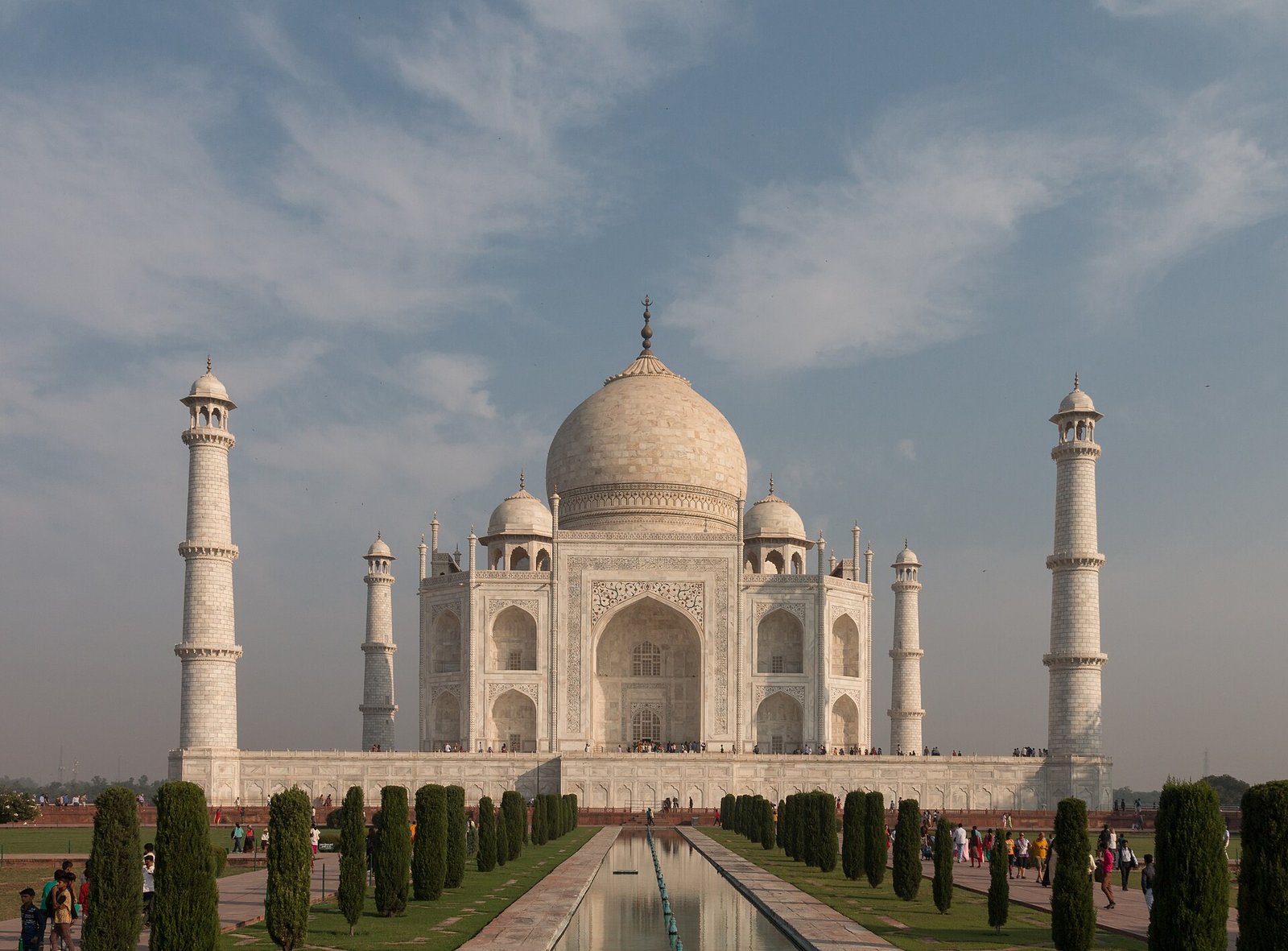
Delhi, Agra and Jaipur form India’s classic first-timer loop of about 720 km. Five days is the minimum that doesn’t feel rushed. Here’s the plan, and the bookings that actually matter.
Disclosure: some links on this page are affiliate links. If you book through them we may earn a commission at no extra cost to you. Affiliate disclaimer.
The 5-day plan
- Day 1, Delhi: Old Delhi (Jama Masjid, a cycle-rickshaw through Chandni Chowk), then Humayun’s Tomb at sunset.
- Day 2, Delhi → Agra: take the morning Gatimaan Express (dep. Hazrat Nizamuddin 08:10, arr. Agra Cantt 09:50 per the railway timetable; it doesn’t run on Fridays), then Agra Fort and Mehtab Bagh at sunset for the Taj view across the river.
- Day 3, Agra → Jaipur: Taj Mahal at sunrise (it’s closed on Fridays), then drive about 4–5 hrs via Fatehpur Sikri and the Chand Baori stepwell.
- Day 4, Jaipur: Amber Fort early, Hawa Mahal, City Palace, Jantar Mantar.
- Day 5, Jaipur → Delhi: Nahargarh at sunrise, then a train or drive back. Allow most of the day, since road times depend heavily on traffic.
Train vs private driver
| Trains | Private car + driver | |
|---|---|---|
| Cost | Cheap; fares depend on class (book on IRCTC) | Priced for the whole loop; get 2–3 written quotes |
| Pros | Fast Delhi–Agra, no road fatigue | Door-to-door, stops at Fatehpur Sikri and Abhaneri |
| Cons | Tickets sell out, so book on IRCTC early | Long road days |
Our take: a mix works best. Take the train Delhi→Agra, a driver Agra→Jaipur (so you see the stops on the way), and the train Jaipur→Delhi.
Compare private Golden Triangle drivers & tours →
What to book ahead
- Taj Mahal tickets online: INR 1,100 for foreign visitors at the gate (INR 50 less online), plus INR 200 to enter the main mausoleum. Children under 15 enter free (official Taj Mahal site).
- Gatimaan/Vande Bharat seats, which can sell out.
- Hotels in Agra within walking distance of the Taj East Gate, for an easy sunrise.
- The Delhi airport transfer for late-night arrivals.
What not to pre-book
Jaipur sights (buy tickets at the gate or as a composite ticket), and rickshaws or tuk-tuks (use Uber or Ola).
Book a Taj Mahal sunrise guided tour →
Compare hotels near the Taj Mahal East Gate →
Compare heritage havelis in Jaipur →
Delhi airport: the Airport Express metro line runs to New Delhi station, and prepaid taxi counters and app cabs (Uber, Ola) operate from the terminals. For a late-night arrival, ask your hotel to send a car.
Visa: most nationalities need a visa for India. Apply for the e-Visa only on the official government portal (indianvisaonline.gov.in) and avoid look-alike sites that charge extra fees.
Best time to go
October–March is cool and dry. April–June is very hot. Monsoon runs July–September.
See our India travel guide for more regions and costs, and browse more bookable experiences on our tours page.
A day-by-day reality check
- Delhi’s traffic turns 10 km into an hour at rush hour. Use the metro for longer hops within the city.
- The Taj at sunrise is worth the early alarm: the light is soft and the crowds are at their thinnest. Gates open around sunrise. Join the queue early and carry as little as possible, because large bags and many items aren’t allowed inside.
- Fatehpur Sikri is best with a guide. Without context it’s a set of beautiful empty courtyards.
- Amber Fort gets crowded and hot by late morning. Arrive at opening time.
Where to stay
- Delhi: Connaught Place or Aerocity (handy for late flights). Paharganj is cheap but hectic.
- Agra: near the Taj East Gate (Taj Ganj / Fatehabad Road), so sunrise is a short walk.
- Jaipur: a heritage haveli inside or near the Pink City is the experience. C-Scheme is quieter and more modern.
Budget (per person per day, estimates)
- Budget: about USD 30–50, with guesthouses, sleeper and chair-car trains, and local food.
- Mid-range: about USD 80–150, with 4-star hotels, a private driver shared by two, and guided entries.
- Luxury: USD 300+, with Oberoi/Taj hotels and private guides throughout.
Entry fees for foreigners add up: the Taj Mahal alone is INR 1,300 with mausoleum access. Agra Fort, Fatehpur Sikri and the Jaipur forts each charge separate foreigner fees, so budget for them.
Scams and annoyances to know
- “Your hotel is closed / the Taj is closed today” from touts at stations. Check the facts yourself. (The Taj really is closed on Fridays.)
- Gem-shop detours from drivers. Agree a no-shopping itinerary in writing.
- Unofficial guides at monuments. Use licensed ones, who carry an ID card, or book in advance.
Health and practical tips
Drink sealed or filtered water only. Ease into street food at busy stalls with high turnover. Carry small change for tips and toilets. Download Uber/Ola and an offline map. An eSIM works well for foreign phones.
Get an India eSIM before you land →
Extending the trip
- +2 days: Ranthambore for tiger safaris (October–June).
- +3 days: Udaipur for lakes and palaces (fly from Jaipur).
- +2 days: Varanasi by train or flight from Agra or Delhi.
FAQ
Is 5 days enough for the Golden Triangle? Yes, as a minimum. It covers Delhi, Agra and Jaipur at a steady pace. Add a day for Ranthambore or Udaipur if you can.
Is the Taj Mahal open on Fridays? No. The Taj Mahal is closed on Fridays.
Train or car for the Golden Triangle? A mix works best: train Delhi→Agra, a car Agra→Jaipur with stops, and train back to Delhi.
When is the best time to do the Golden Triangle? October to March.


Comments are closed