

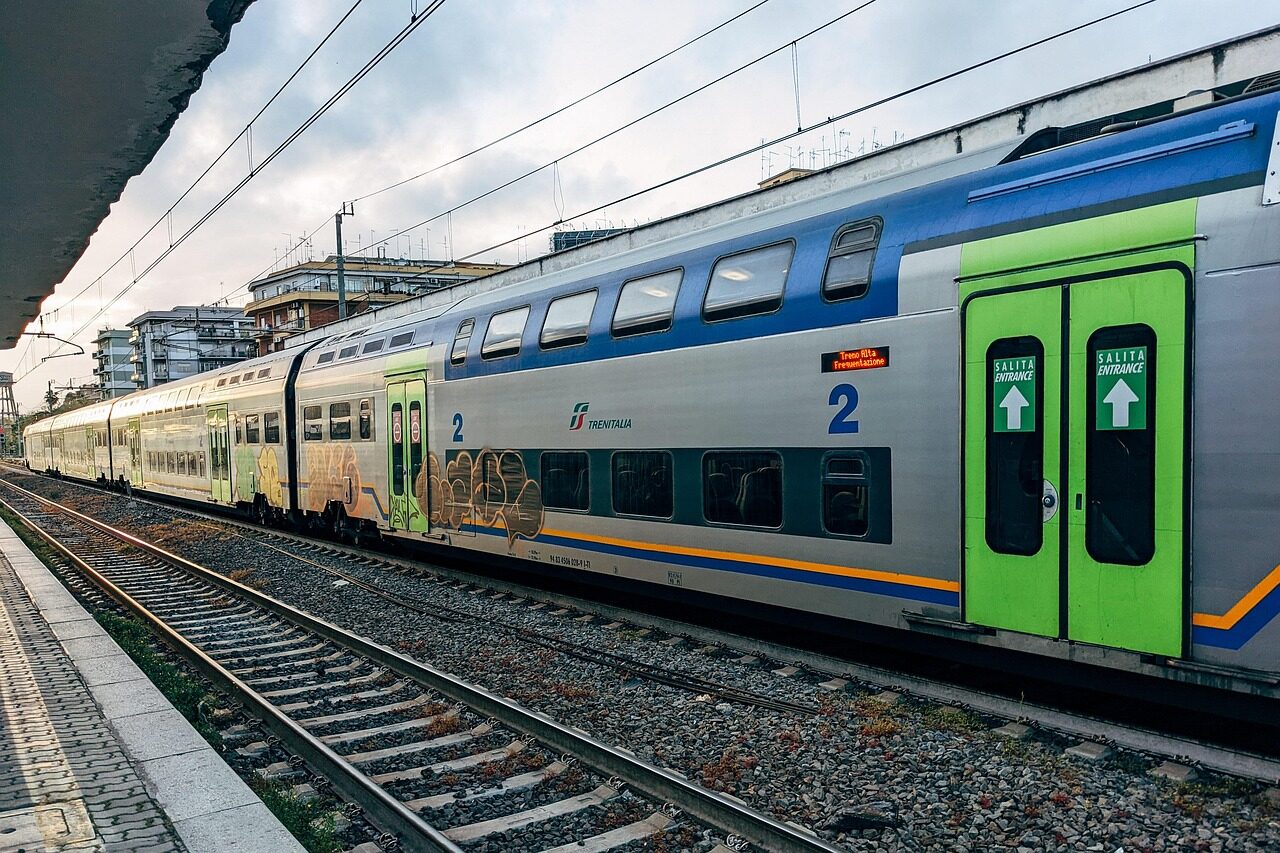
This is the decision that most affects how an Italy trip feels, and most people get it wrong in the same direction — they hire a car for a trip that is almost entirely cities.
The rule
Cities: train. Countryside: car. That covers ninety per cent of trips.
Italy’s high-speed rail network between Rome, Florence, Bologna, Milan, Venice and Naples is genuinely excellent — fast, frequent, comfortable and cheap if you book ahead. Driving that same route means motorway tolls, expensive fuel, city parking you will struggle to find, and a real risk of driving into a restricted zone you did not know existed.
What the train actually costs
Booked two to three weeks ahead, typical one-way high-speed fares run roughly €25–45 Rome to Florence, €35–60 Florence to Venice, €30–55 Rome to Naples. On the day, expect two to three times that.
Journey times are short: Rome to Florence is about 1h35, Florence to Venice about 2h, Rome to Naples about 1h10. City centre to city centre, with no airport security and no parking.
Two operators run these routes — Trenitalia and Italo — and they compete on the same lines. Checking both is worth a minute; the price gap can be substantial.
Regional trains are different: slower, cheaper, no reservation needed, and paper tickets must be validated before boarding. High-speed tickets with an assigned seat do not need validating.
What a car actually costs
The rental headline rate is the smallest part. A week’s compact hire in shoulder season might be €200–350, but add:
- Fuel at roughly €1.75–1.95 a litre
- Motorway tolls — Rome to Florence is around €20 each way
- City parking at €20–35 a day where you can find it
- Excess insurance, which is where rental desks make their margin
- An international driving permit if your licence is from outside the EU — legally required, and occasionally checked
Realistically a week’s driving costs €450–700 all in, against maybe €150–250 in train fares for two people covering the same cities.
ZTL: the thing that catches everyone
Almost every Italian city centre is a zona a traffico limitato — closed to non-resident vehicles during posted hours, enforced by automatic cameras. There is no barrier and no warning beyond a sign that is easy to miss.
Fines are typically €80–120 per entry, and each pass through a camera counts separately. They arrive by post months later, often with an administration fee added by the rental company for supplying your details.
If your accommodation is inside a ZTL, they can usually register your plate for temporary access — but you must ask, and you must do it before you drive in.
When a car genuinely earns its cost
- Rural Tuscany and Umbria. Hill towns, wineries and agriturismi that public transport does not reach.
- Puglia. Spread out, sparsely served by rail, and the towns you want are not the ones with stations.
- Sicily. Large, with sights that are genuinely hard to reach otherwise.
- The Dolomites. Mountain valleys with limited bus services.
In each case the pattern that works is to take trains between cities, then hire a car for the rural section only, picking it up from a station rather than an airport and returning it before your next city.
What about the Amalfi Coast?
Do not drive it unless you actively want to. The road is narrow, spectacular, busy with buses, and parking in Positano runs €5–8 an hour where it exists at all. Ferries and buses cover the coast perfectly well, and a private transfer from Naples is around €110–150 each way.
The hybrid that usually wins
Fly into Rome, train to Florence, hire a car in Florence for three or four days of Tuscany, drop it back in Florence, train to Venice, fly home. You get the countryside without paying to park a car outside museums for a week.
For how this affects the overall budget, see what a week in Italy costs, or model it directly in our trip cost calculator. If you are choosing where to base yourself, our Italy travel guide covers each region. City tours and day trips are worth comparing on GetYourGuide before you assume you need a car to reach something.
VTourBook earns a commission when you book through our links, at no extra cost to you. We don’t sell tours or own hotels — which is why these guides tell you when the cheaper option is the better one.
Compare car hire in Italy

Prices for the same room or ticket often differ between these. Some links may earn us a commission at no extra cost to you.
Frequently asked questions
Is it better to travel Italy by train or car?
Train for cities, car for countryside. Italy’s high-speed rail between Rome, Florence, Bologna, Milan, Venice and Naples is fast and cheap booked ahead. A car only earns its cost in rural Tuscany, Umbria, Puglia, Sicily and the Dolomites.
How much does it cost to rent a car in Italy for a week?
The headline rate might be €200–350 for a compact in shoulder season, but with fuel, motorway tolls, city parking and excess insurance a realistic all-in figure is €450–700 for a week.
What is a ZTL in Italy?
A zona a traffico limitato — a restricted zone covering most Italian city centres, closed to non-resident vehicles and enforced by automatic cameras. Fines run roughly €80–120 per entry and arrive by post months later. If your hotel is inside one, ask them to register your plate in advance.
How much are train tickets in Italy?
Booked two to three weeks ahead, high-speed fares run roughly €25–45 Rome to Florence, €35–60 Florence to Venice, and €30–55 Rome to Naples. Same-day tickets typically cost two to three times as much.
Do I need an international driving permit in Italy?
If your licence was issued outside the EU, yes — it is legally required alongside your national licence, and it is occasionally checked by both rental desks and police.
About the author
Born and raised in the Middle East, I’ve spent most of my adult life travelling — more than 40 countries so far. I write these guides the way I’d explain them to a friend: real prices, honest opinions, and a straight answer about when the cheaper option is the better one.


Comments are closed